5L Fully Automated Compound Remediation System
A bench-scale system that refines a finished botanical extract, selectively removing unwanted constituents at room temperature while preserving the aromatics and actives.

COMERG • Parsley extraction
Petroselinum crispum (Mill.) Fuss
Turn fresh parsley leaf into a bright, green, true-to-herb extract with COMERG equipment. Our cold, room-temperature, low-pressure process captures the lively, green parsley note, the p-mentha-1,3,8-triene and phellandrene that define it, with no heat to flatten the fresh top.
The herb
Parsley, Petroselinum crispum, is the most used culinary herb around the Mediterranean, and its scent is unmistakably fresh and green. That character comes from p-mentha-1,3,8-triene and beta-phellandrene, lifted by linalool and limonene, with apiole and myristicin, the phenylpropanoids typical of parsley, giving a warm, spicy depth underneath.
We work with the fresh leaf, cut through the summer and processed cold so the bright, herbaceous top survives. Nothing is added, and the lively green character of the herb is carried straight into the extract.
The extract
Run on COMERG equipment, parsley leaf yields a standardised, true-to-herb extract, batch after batch. Because the extraction is cold and solvent-light, with no high heat, the fresh green character carries straight through to the finished oil. The figures below are typical of a standardised BPar-40.1 grade.
The method
No heat, no leftover solvent. This is what happens inside a COMERG aerosol system, and why the extract keeps the fresh, green character of parsley leaf.
Non-toxic liquefied R134a gas is introduced to the fresh parsley leaf at controlled, low pressure. There is no heat, the cycle begins and stays at room temperature.
The liquid gas gently dissolves the p-mentha-1,3,8-triene, the phellandrene, linalool and the phenylpropanoids, while the fresh, volatile green top notes stay structurally intact.
The R134a is fully recovered and recycled in a closed loop. What is left is a concentrated parsley extract, at least 40% volatile oil, with under 0.1 g/kg residue.
Aromatic profile
Principal constituents identified by GC-MS, each above 1%. p-Mentha-1,3,8-triene leads, the green heart of parsley, with phellandrene, linalool and limonene, while apiole and myristicin give the warm, spicy depth.
The green note sits in p-mentha-1,3,8-triene, phellandrene and limonene; apiole and myristicin are the characteristic parsley phenylpropanoids and the reason the concentrated extract is used at low levels. Other extractables present. Per-batch GC-MS report available on request.
Specification
Why parsley, why cold
Petroselinum crispum, Bulgaria
Versus heat-based methods
Applications
Parsley extract naturally contains apiole and myristicin, so the concentrated extract is used at low, culinary levels and is not recommended for use in pregnancy at high doses. It is also classed as a dangerous good for transport (flammable liquid). Like all our extracts it is a raw material for formulation. Keep away from children.
This parsley extract is edible and can be used concentrated or diluted in a carrier oil to suit the application. Typical filling rates for the concentrated extract in food are 5 to 250 mg per kilogram of product.
Why the COMERG line
The bright, lively green above is what the right equipment makes repeatable. Our line is engineered around the things that matter when you process a delicate, high-water leafy herb.
Why it wins
Against steam distillation, solvent and CO2, cold R134a extraction keeps more of the parsley, with a fresh, true-to-leaf result.
| Feature | COMERG R134a | Steam distillation | Solvent | CO₂ supercritical |
|---|---|---|---|---|
| Process temperature | < 25 °C (room temp) | 100-150 °C | 40-70 °C | 31-80 °C |
| Aromatic preservation | 95%+ | 65-80% | ~85% | ~85% |
| Fresh green top notes | Preserved | Partly lost | Mostly kept | Mostly kept |
| Compound recovery | up to 97% | 70-85% | 80-90% | 85-92% |
| Solvent residue | < 0.1 g/kg | None | Needs post-purge | None |
| Energy use | 85% less vs solvent | High | Medium-high | Very high |
| Special facility | Not required | Not required | Required | High-pressure safety |
From leaf to extract
A complete COMERG line takes parsley from fresh leaf to a finished extract. These are the core stages, each available as standalone equipment.
The heart of the line. Liquefied-gas systems that pull parsley oil cold, below 25 °C, from 10 l pilot units up to 2000 l.
Room temp • 97% recoveryCuts the fresh parsley leaf cleanly in the field through the summer, so the freshest, greenest crop reaches the extractor fast.
Field stageFrom a 10 l pilot system to industrial 2000 l lines, the same cold process scales with your volume.
10 l - 2000 lQuestions
A 100% natural parsley leaf extract from Petroselinum crispum, product code BPar-40.1. It reaches at least 40% volatile oil, led by around 21% p-mentha-1,3,8-triene with phellandrene, linalool and the parsley phenylpropanoids, and no additives.
Liquefied food-grade gas extraction at room temperature, below 25 °C, and low pressure. Because there is no high heat, the delicate aromatic compounds are preserved and solvent residue stays below 0.1 g/kg.
Parsley's freshness lives in light terpenes like p-mentha-1,3,8-triene that prolonged heat can flatten. Cold R134a extraction concentrates them cleanly, so the extract keeps its bright, true-to-leaf green character.
Roughly 1 kg of extract represents around 250 to 300 kg of fresh parsley leaf.
Yes, it is edible, with typical filling rates of 5 to 250 mg per kilogram of product. Because it contains apiole and myristicin it is used at low, culinary levels, and the concentrated extract is classed as a dangerous good for transport, so it ships under the appropriate dangerous-goods rules.
Yes. The same cold process runs from a 10 l pilot unit to 2000 l production systems, so you can start small and grow without changing method.
Yes. A per-batch GC-MS analysis is available on request, and a Safety Data Sheet per 2006/1907/EC is supplied with the product.
Tell us your throughput and target product. We will recommend the right system, share a yield estimate for your parsley, and reply with pricing and lead time, usually within 48 hours.
COMERG extracts are raw materials for product formulation. Parsley extract contains naturally occurring apiole and myristicin and is used at low levels; it is not intended for direct consumption or for undiluted topical application, and the concentrated extract is classed as a dangerous good for transport. This information is provided to the best of our knowledge and is not a substitute for prior testing of suitability for the intended use. Keep away from children.
The parsley line
The machines below make up the parsley line, the equipment that takes the leaf through to a finished extract. Request a quote on any unit and we will reply with pricing and lead time.
Showing 17–26 of 26 results
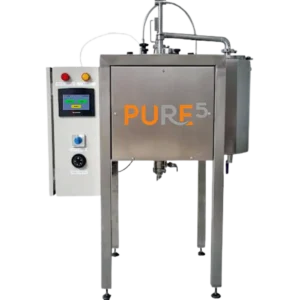
A bench-scale system that refines a finished botanical extract, selectively removing unwanted constituents at room temperature while preserving the aromatics and actives.
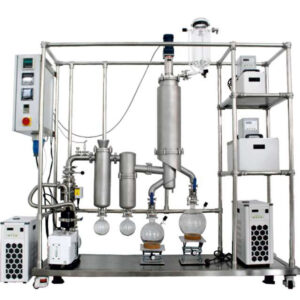
A stainless-steel short-path wiped film system that distills and purifies heat-sensitive botanical fractions in seconds under deep vacuum, with no thermal damage.
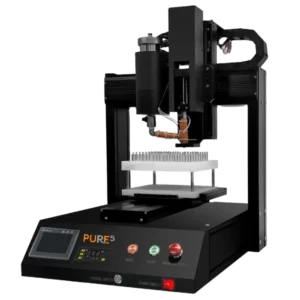
A compact automated filler for viscous botanical oils, with a heated mixer, jacketed feed and temperature-controlled nozzle for clean, bubble-free 0.3-3 mL doses.
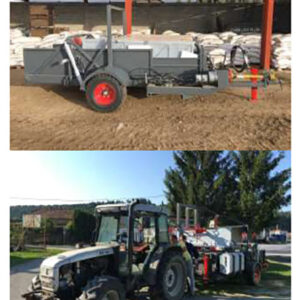
A tractor-towed harvester that cuts flowering tops and stalks in a single pass, feeding a self-unloading 5 m³ bunker at up to 2 hectares per hour.
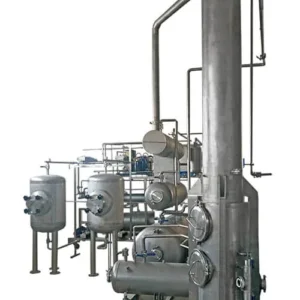
A scalable 20-1000L ethanol platform that washes botanicals with chilled food-grade ethanol and recovers the solvent in a closed loop for clean, full-spectrum extracts.
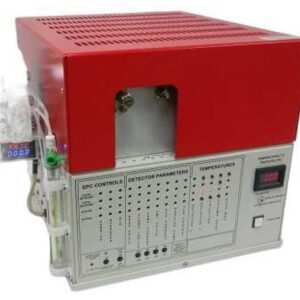
A compact benchtop GC-FID analyser with a built-in hydrogen generator and dual columns for fast, low-cost potency, aroma-profile and residual-solvent testing.
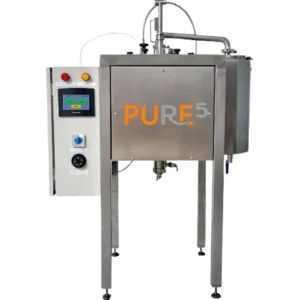
A low-pressure decontamination system that removes mold, yeast and microbial load from botanical material and extracts at room temperature, with no heat or irradiation.
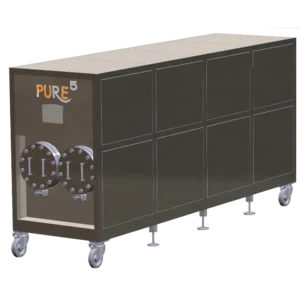
A solvent-free 120L production system that extracts polar, water-soluble compounds with pressurised hot water, delivering both a concentrated extract and an aromatic water.
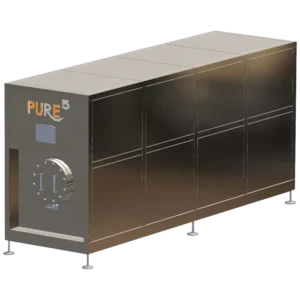
A solvent-free 60L system that extracts polar, water-soluble compounds with pressurised hot water, yielding both a concentrated extract and a fragrant aromatic water.
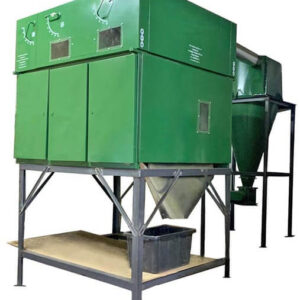
A sifting and air-separation line that sorts dried botanical biomass into three clean fractions – flower and leaf, stalk, and seed – ready for extraction or sale.
For this system. We will reply shortly.