1000L HTE Fully Automated Aerosol Extraction System
An industrial-scale aerosol extraction system for very high-volume, room-temperature, residue-free processing of any botanical.

COMERG • Linden extraction
Tilia tomentosa Moench.
Capture the honeyed scent of lime blossom with COMERG equipment. Our cold, room-temperature, low-pressure process lifts the soft, sweet, lightly green linden note, the rose-honey phenylethyl alcohol and its esters, straight from the fresh flower, one of perfumery's most loved and most fleeting scents.
The flower
Linden, the lime blossom, fills whole streets with a honeyed, slightly green sweetness for a brief window each summer. The scent comes largely from phenylethyl alcohol and its benzoate ester, the rose-honey facet perfumers prize, lifted by a touch of citronellol. The flowers are wonderfully nectarous, which is why bees make the famous linden honey from them.
We work with fresh blossoms, picked in late spring and processed cold so that soft, fleeting note survives. This is the silver linden, Tilia tomentosa, and like all linden it gives very little to a still, which is part of what makes a true linden extract so prized.
The extract
Run on COMERG equipment, fresh linden yields a rich, true-to-bloom floral extract, batch after batch. Because the extraction is cold and solvent-light, with no high heat, the soft honey-rose note carries straight through to the finished material. The figures below are typical of a standardised BLin-50.1 grade.
The method
No heat, no leftover solvent. This is what lets a flower that gives almost nothing to a still yield its true scent inside a COMERG aerosol system.
Non-toxic liquefied R134a gas is introduced to the fresh linden blossoms at controlled, low pressure. There is no heat, the cycle begins and stays at room temperature.
The liquid gas gently dissolves the phenylethyl alcohol, its esters, citronellol and the soft floral compounds, the delicate molecules that carry linden's honeyed note.
The R134a is fully recovered and recycled in a closed loop. What is left is a concentrated linden extract, at least 50% volatile oil, with under 0.1 g/kg residue.
Aromatic profile
Principal constituents identified by GC-MS, each above 1%. Phenylethyl alcohol leads, the rose-honey heart of the linden note, supported by its benzoate ester and citronellol, with natural plant waxes making up much of the rest.
The scent comes from phenylethyl alcohol, phenylethyl benzoate and citronellol; the nonadecane, heneicosane and tricosane are natural plant waxes carried through from the flower. Other extractables present. Per-batch GC-MS report available on request.
Specification
Why linden, why cold
Tilia tomentosa, Bulgaria
Versus distillation, which gives little
Applications
This linden extract is edible and can be used concentrated or diluted in a carrier to suit the application. Typical filling rates for the concentrated extract in food are 0.3 to 5 mg per kilogram of product. Like all our extracts it is a raw material for formulation, not for direct or undiluted use.
Why the COMERG line
Linden is a perfect example. A flower that gives almost nothing to a still gives up its honeyed scent to a cold, gentle process. Our line is engineered around exactly that kind of fragile, high-value bloom.
Why it wins
For a delicate flower like linden the contrast is stark, distillation gives very little, while cold R134a extraction delivers a true, honeyed material.
| Feature | COMERG R134a | Steam distillation | Solvent (absolute) | CO₂ supercritical |
|---|---|---|---|---|
| Process temperature | < 25 °C (room temp) | 100-150 °C | 40-60 °C | 31-80 °C |
| Suits linden | Yes, true note | No, very low yield | Possible, harder | Possible |
| Fragile molecules | Preserved | Largely lost | Mostly kept | Mostly kept |
| Solvent residue | < 0.1 g/kg | None | Needs post-purge | None |
| Energy use | 85% less vs solvent | High | Medium-high | Very high |
| Special facility | Not required | Not required | Required | High-pressure safety |
From bloom to extract
A complete COMERG line takes linden from fresh bloom to a finished extract. These are the core stages, each available as standalone equipment.
The heart of the line. Liquefied-gas systems that lift the true linden scent cold, below 25 °C, from 10 l pilot units up to 2000 l.
Room temp • true noteBrings in the fresh linden blossom at the short peak of its bloom, so the most fragrant flowers reach the extractor fast.
Field stageFrom a 10 l pilot system to industrial 2000 l lines, the same cold process scales with your volume.
10 l - 2000 lQuestions
A 100% natural linden flower extract from Tilia tomentosa, product code BLin-50.1. It reaches at least 50% volatile oil, led by around 25% phenylethyl alcohol, the rose-honey heart of the linden note, with no additives.
Linden flowers give very little oil, and roughly 1 kg of extract represents 600 to 700 kg of blossom. The scent is also famously fleeting, so a true, stable linden extract is rare and highly valued.
Liquefied food-grade gas extraction at room temperature, below 25 °C, and low pressure. Because there is no high heat, the delicate floral compounds are preserved and solvent residue stays below 0.1 g/kg.
Roughly 1 kg of extract represents around 600 to 700 kg of fresh linden blossom, which is part of why the material is so precious.
Yes. Linden extract is edible, with typical filling rates of 0.3 to 5 mg per kilogram of product. It suits bakery, honey and sweet products and beverages, as well as perfumery and cosmetics, and is a raw material for formulation rather than for undiluted use.
Yes. The same cold process runs from a 10 l pilot unit to 2000 l production systems, so you can start small and grow without changing method.
Yes. A per-batch GC-MS analysis is available on request, and a Safety Data Sheet per 2006/1907/EC is supplied with the product.
Tell us your throughput and target product. We will recommend the right system, share a yield estimate for your linden blossom, and reply with pricing and lead time, usually within 48 hours.
COMERG extracts are raw materials for product formulation. They are not intended for direct consumption or for undiluted topical application in cosmetics, perfumery or aromatherapy. This information is provided to the best of our knowledge and is not a substitute for prior testing of suitability for the intended use. Keep away from children.
The linden line
The machines below make up the linden line, the equipment that takes the bloom through to a finished extract. Request a quote on any unit and we will reply with pricing and lead time.
Showing 1–16 of 26 results
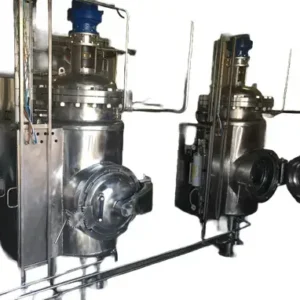
An industrial-scale aerosol extraction system for very high-volume, room-temperature, residue-free processing of any botanical.
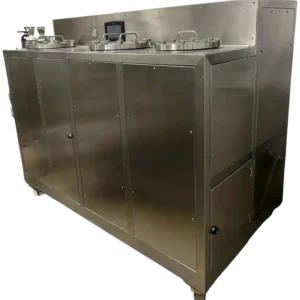
A commercial-scale low-pressure aerosol system that gently extracts essential oils and aromatics from any botanical at room temperature, with no residue.
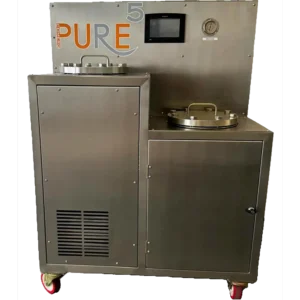
An entry-level, fully automated low-pressure aerosol system that gently extracts essential oils and aromatics from virtually any botanical at room temperature, with no residue.
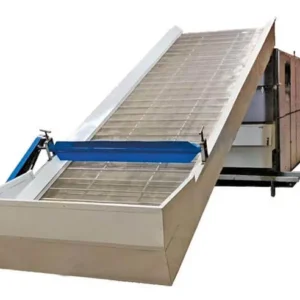
A continuous belt dryer that gently dries freshly harvested botanical biomass on a four-layer, 12 m mesh belt at an adjustable 0-90 °C, fed and discharged automatically.
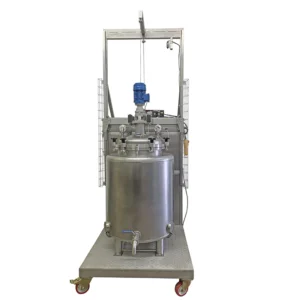
A production-scale system that refines large lots of botanical extract to a fixed specification at room temperature, with no thermal damage to the active profile.
Our largest aerosol extraction platform, built for maximum-volume industrial production with the same gentle, residue-free low-pressure process.
A high-capacity commercial low-pressure aerosol system for room-temperature, residue-free extraction of essential oils and aromatics from any botanical.
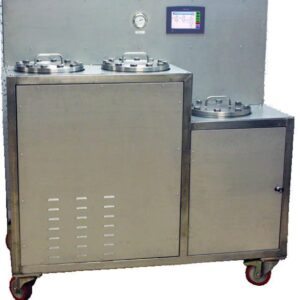
A compact production-scale low-pressure aerosol system that gently extracts essential oils and aromatics from any botanical at room temperature, with no residue.
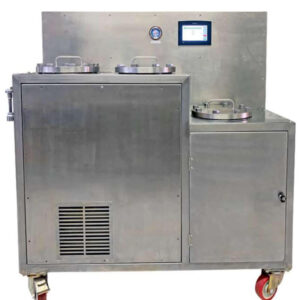
A dual-vessel 20L MAX system that doubles throughput while keeping the same gentle, room-temperature, residue-free aerosol extraction for any botanical.
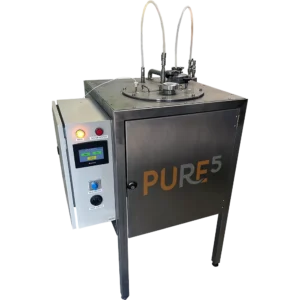
A pilot-scale system that scales a validated remediation method to repeatable batches, stripping targeted impurities from extract while protecting the active profile.
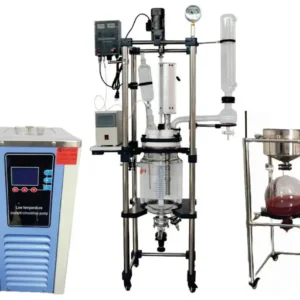
A 30L ultrasonic-assisted extraction system that uses 20 kHz cavitation to rupture plant cells and release oils into solvent quickly, at low temperature, with vacuum filtration.
A large-scale industrial aerosol system delivering high-volume, room-temperature, residue-free botanical extraction at low pressure.
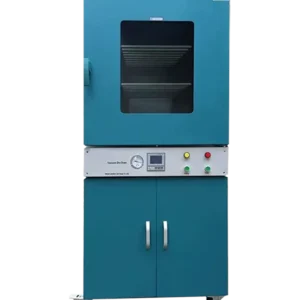
A production-scale 18 cu ft vacuum oven with a pull-out drawer and integrated pump that purges and dries large batches of botanical extract at low temperature.
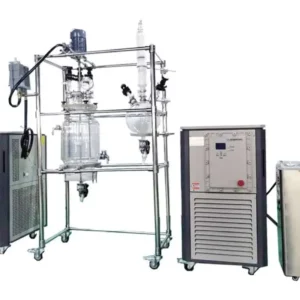
A 50L jacketed reactor that crystallises high-purity botanical isolates from a distilled feed under precise temperature and agitation control, with repeated recrystallisation for maximum purity.
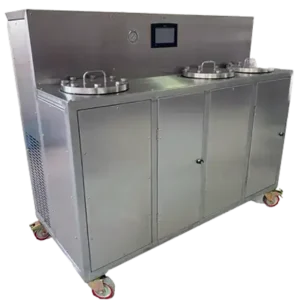
A floor-standing production-scale low-pressure aerosol system that gently extracts essential oils and aromatics from any botanical at room temperature, with no residue.
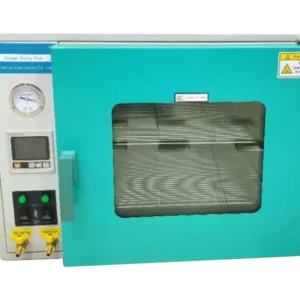
A compact 2 cu ft vacuum oven that purges residual solvent and gently dries botanical extracts at low temperature under vacuum, protecting colour, aroma and actives.
For this system. We will reply shortly.