
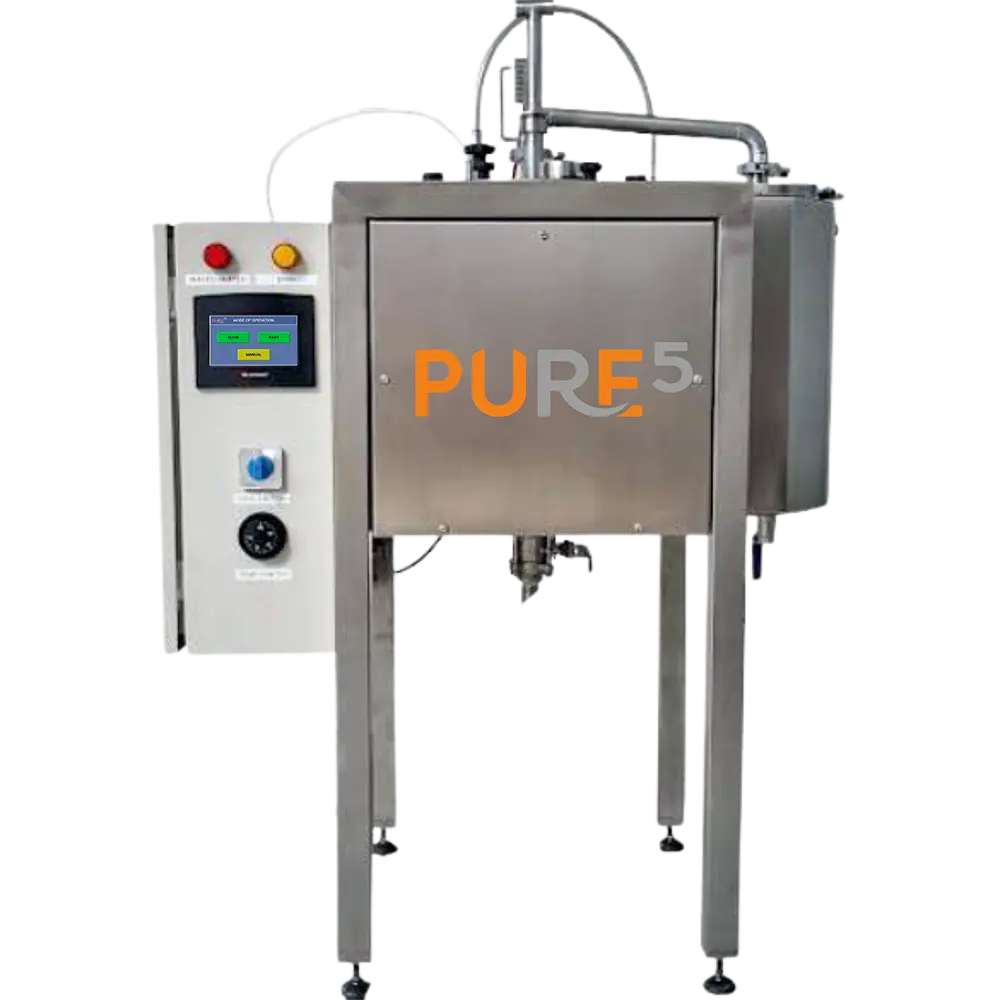
Mold & Yeast Remediation System
A low-pressure decontamination system that removes mold, yeast and microbial load from botanical material and extracts at room temperature, with no heat or irradiation.
Description
The Mold & Yeast Remediation System decontaminates botanical material and extracts that carry microbial load. Using a controlled low-pressure R134a pass at room temperature, it lifts mold, yeast, mildew and spores away from the product while leaving the essential oils, aroma and actives intact – no heat, no irradiation and no harsh chemistry that would denature the natural profile.
How decontamination works, step by step
1. LoadPlace the contaminated material or extract into the decontamination vessel.
2. Solvent passLow-pressure R134a flushes the product at 15-45 °C, lifting microbial load.
3. StripMold, yeast and spores are carried off and separated from the actives.
4. RecoverDecontaminated product is collected; solvent is recovered for reuse.
What it removes, what it keeps
Targets removed
Profile preserved
Decontamination without heat
Microbial remediation is a decontamination step rather than a separation of plant compounds. The system passes inert R134a through the material at room temperature and low pressure, carrying mold, yeast, mildew and their spores away with the solvent stream while the oil-soluble actives stay with the product.
Because no heat or radiation is used, the aroma profile, color and active strength are preserved, so material that would otherwise fail a microbial limit can be brought back into specification without being degraded. The solvent recovers quickly and leaves no residue.
Technical specifications
Decontamination Vessel
Separator / Recovery
Chiller / Heat Exchange
Dimensions & Power
Control & Safety
Solvent
Where it’s used
See it run
Frequently asked questions
Microbial contamination – mold, yeast, mildew, spores and associated aerobic load – while preserving the natural oil profile.
No. It works at room temperature with an inert solvent, so it does not denature actives or alter aroma the way heat or radiation can.
The process is selective for microbial load, so the aroma, color and active strength are retained.
Botanical material or extract that carries microbial contamination, roughly 7 kg per batch.
Inert, non-flammable R134a, recovered quickly thanks to its low boiling point.
Yes. The solvent is non-flammable, non-explosive and non-toxic, and pressure transducers shut the system down automatically to prevent over-pressurization.
Reviews
There are no reviews yet.